Posts by: lucia

Don’t fall victim to the ‘Great Resignation’ — plus two free hours of consultation

   |   By  |  0 Comments

You’ve heard about the “Great Resignation.” Millions of Americans are leaving their jobs, according to government data. To keep this from happening to you, it’s time to take stock of the work environment your company’s leaders are creating. Is it one where people can do their best work and want to stay?

With many white-collar employees working from home due to COVID-19, this can be more challenging than it was just a few years ago. Nevertheless, some constants remain. Research conducted by the Center for High Performance found that a work environment that drives innovation and yields measurable results is distinctly different from one that does not. The difference is in how people are treated.

Our research uncovered that the overwhelming majority or employees are not engaged at work. They don’t ask questions or share ideas, and eventually become unmotivated and decide to leave. What kind of environment are your employees operating in? One that drains, or one that nurtures? How do you boost Return on Brainpower (ROB)?

Five Ways to Boost Return on Brainpower

  1. Treat smart people like they are smart. Tell people what to do, not how to do it. Trust that people want to do the right thing, then get out of the way and let them do it. There are different ways to get a good result, and since your workers are closer to the problem, they may have better ideas on how to solve it. Also, when people feel they “own” the idea, they try harder to make it work.
  2. Look for what’s right. Instead of dismissing suggestions you don’t agree with, ask what’s right about that “wrong answer,” what’s smart about the “bad idea.” Innovation always looks strange. Did you ever think you would be taking photos on a phone?
  3. Listen to the contrarian voice. Groupthink can kill high performance. The person with an idea that goes against accepted thinking may be able to see what others don’t.
  4. Reward behavior. Thank people and reward them for results. But when you applaud their accomplishments be sure to tell the story not only of what they accomplished, but what specific behaviors achieved the results. It’s not just about what they achieved, but how they got there. Thank and reward the proactivity, creativity, learning from failure, and courage.
  5. Remove barriers to success. Spend time with your best people to figure out what is preventing employees from using their brainpower effectively and eliminate those barriers. Otherwise, your high-performing employees will waste time removing obstacles — time that could have been spent productively. So spend the time, ask the questions, and expect to hear the unexpected and you will find the barriers. Remove the barriers, wherever and whenever you can.

Creating an environment where people are encouraged to use their brainpower improves performance by stimulating them to be more creative and productive. That’s good for morale and the bottom line. The best way to increase ROI is to increase ROB!

Are you communicating in a way that encourages brainpower? Are you unintentionally asking your staff to leave their ideas at the door? If you would like guidance on your approach to communications, I am happy to offer up to two hours of free virtual consultations.

RENEW: 5 critical steps to ADVANCE™ after COVID

   |   By  |  0 Comments

A common mistake many senior executive teams are making now during this time of uncertainty is to rush to create a new plan and begin executing it immediately. Before your team makes critical decisions — such as whether to change your business strategy, reorganize your leadership team, bring on new people or continue to work remotely — follow these five steps:

  1. Reframe Your Thinking. The best way forward in the long run is to slow down to speed up.
  2. Process Pent-Up Emotions. Unexamined emotions, such as grief over COVID losses, get in the way of effective decision making.
  3. Ask New Questions. Based on what you’ve learned during COVID, consider what changes you want to keep, discard and add.
  4. Evolve Your Thinking. Make a specific, actionable plan built on what you want to keep and add.
  5. Wave Good-Bye to Old Ways. Create a ritual to “throw away” what you want to discard. One company burned the notes listing what they wanted to discard and scattered the ashes at sea.

A CfHP client followed these steps after the 2008 financial crisis, and achieved record results the following year. Unite, the UK’s top provider of student accommodations, was hit hard by the crisis.

Shane Spiers, principal at Summit SCALE, was Unite’s Group HR director in 2008. “We felt things were outside of our control,” he recalled. “But we managed it. The task then became bringing everyone along with us.”

In January 2009 CfHP conducted a two-day ADVANCE™ with Unite’s senior executives. In the opening team exercise, they were asked to draw an image that represented the past year. The CEO, a reserved Englishman, drew a picture of himself piloting an airplane soaring upward. He said he felt elated — and then a missile hit the plane and it crashed underwater. The CEO broke down in tears and the team members bonded around their similar emotional journeys.

They recognized the need to process what happened before they could move forward. “We hadn’t realized the emotional toll,” Spiers said. After surfacing their emotions, leaders were able to develop an action plan for their teams and let the past go.

Let CfHP help your Senior Leadership Team ADVANCE™ to the future. Learn more about our executive ADVANCES™ here or email me at lucia@centerforhighperformance.com.

Listening requires more than your ears

  |   By  |  0 Comments

Greetings!

In my last blog I discussed how “empathy is not optional.” To truly be empathic you must first learn to listen — but not just with your ears. In the Chinese culture, which is older and wiser than ours, listening is accomplished not just with your ears, but also with your eyes and your heart.

My colleague Flinn Dallis, an executive coach at the Center for High Performance, introduced me to the Chinese symbol for listening (see below). It is a combination of five different symbols representing ears, eyes, undivided attention, heart and king.

Of course you must listen with your ears. If done well, listening with your ears allows you to repeat what the other person has said, a necessary leadership skill. Sometimes you are so convinced that you know what the other person is going to say that you fail to hear what he or she actually did say. If you’re part of a couple, you’ve surely experienced this phenomenon, and been completely wrong about what your partner actually said. 

To truly hear, you must also listen with your eyes. This requires you to maintain eye contact with the other person and pay attention to what their body may be telling you. For example, if you are having a serious conversation with someone and his arms are folded across his chest, you might say, “I see that your arms are folded; does that mean anything?” Don’t assume you know what that behavior means. The person might respond with “I feel like you’re attacking me,” or “I’m cold; might we turn up the heat?”

In this era of communication through Zoom or FaceTime, listening with your eyes may be tricky, but it is possible, and even more necessary than when you’re face to face. Eye contact is more difficult when you’re looking at a screen, and so is observing people’s body language. It is almost impossible to do either without giving the conversation your undivided attention – the third section of the Chinese symbol. Paying attention is a sign of respect, and it is especially critical when you’re delivering difficult news, or the other person is in pain.

I’ve made a rule that when I’m on a Zoom or phone call I do not allow other “toys” to be in the room, such as a cell phone, iPad or TV set. Consequently, I can’t check my email, respond to texts, read the news at the bottom of the screen or allow myself to be distracted in other ways by these devices. This allows me to “listen” better by observing cues and really hearing what the other person is saying. If a meeting is important enough to accept, it is important enough to pay close attention.

The most critical part of the Chinese symbol is the notion of listening with your heart, which is another way of saying “put yourself in the other person’s shoes.” Try to figure out how it feels to be the person you are conversing with. As a leader, you need to consider the situation your workers are in. Have you thought about what it feels like to work at home without someone to take care of your children? Or what it’s like to be making minimum wage when your spouse is out of work? Or how it feels to not get a promotion that you thought you deserved?

The five parts of the Chinese symbol go in a circle from the upper left-hand corner around to the lower left-hand corner. If you complete this circle by listening with your ears, eyes, undivided attention and heart you will become the “king” — not because you attain power over the other person but because you truly understand what she is saying, and she feels heard. Both parties win.

As a leader in this fast-paced and challenging time, it can be difficult to face each new day, let alone have an uncomfortable conversation and truly listen. Remember to first listen to yourself. What is your body and heart telling you about what you need? Do you need a shoulder to lean on or to take some time away from work and breathe? As the author and motivational speaker Simon Sinek says, “Being a leader isn’t being in charge, it is taking care of those in your charge.” You can’t care for someone else if you haven’t taken care of yourself.

Empathy is not optional

  |   By  |  0 Comments

Greetings!

During the past few months I have had the opportunity to talk to quite a few corporate leaders about how best to communicate with employees during the COVID-19 pandemic. Although I’ve spoken to executives from a variety of industries on five continents, much of what they said was remarkably similar. Whether they are in banking, consumer products or consulting, they are worried about their employees’ safety and emotional state, and concerned about communicating effectively.

The advice I give them is no different than what I recommend when leaders are facing any crisis: Before you communicate, put yourself in the shoes of the people you’re talking to. People all over the world are feeling challenged — their world has been shaken. They may express their feelings in culturally different ways, but the actual feelings are the same. They have the human need for empathy — to know the feelings they are experiencing are understood.

Three important reminders:

  1. Don’t pretend that you know how your employees are feeling. An executive doesn’t know what hourly workers feel like, or what personal challenges their employees might be confronting. Do they have elderly parents to take care of? Do they have a child with special needs? Are they in debt?
  2. Ask “how are you feeling?” Give them time to vent, and acknowledge their fears and concerns (“it’s rough working at home with your children not in school and no child care.”)
  3. Don’t try to talk them out of their feelings (“you shouldn’t feel that way because…”). Their feelings will only increase in intensity.

It’s also important to make sure people feel valued. One way to do that is to thank them for their efforts. An executive at a family-owned health products company told me that her volume of business has increased during the pandemic, and people are working long hours. Employees also are willingly putting themselves in harm’s way. We decided she would mail  handwritten notes to her employees and their family to thank them for living the company’s values through their specific behaviors, including following the protocols of sanitizing, wearing masks and social distancing.

Always remember to be kind. In this time of furloughs and layoffs, people are naturally concerned about whether they will still have a job. If you can reassure them that they will be able to come back, do that. If you can’t, tell them that you don’t know yet. Have the courage to tell them the truth, as soon as you know it. Prolonging the inevitable increases anxiety and decreases performance. When you try to protect people by not giving them information, they will make up information that is sometimes worse than the truth. It is also very unkind.

We all need courageous leaders in times like these. Leaders willing to be direct, tackle tough conversations and questions and show the empathy greatly needed and appreciated. Remember, empathy is not optional.

If you would like guidance on your crisis communications, I am happy to offer up to two hours of free virtual consultations. Please reply to this email if you are interested.

My gift to you during this crisis

  |   By  |  0 Comments

Greetings!

I hope you and your families are well and safe during this difficult time. As we all deal with the challenges presented by the coronavirus pandemic, I have decided to offer you up to two hours of free virtual consultations.

Based on years of experience mentoring CEOs on issues such as layoffs, plant closings and cybersecurity threats, I know that even with the best intentions leaders tend to make common mistakes, such as giving employees either too little or too much information. Some wait too long; others go too fast. In each of these scenarios you risk creating more fear. How do you maintain your credibility, foster trust in leadership and keep spirits as high as possible?

We can address topics such as:

  • What to say to employees when the future is uncertain
  • What information you need before you initiate communication
  • How to approach difficult conversations with compassion
  • How to communicate bad news
  • How to be productive during a stressful time

Communication has never been more important. If you would like guidance on your crisis communications, please reply to this email.

Stay healthy and safe! We will get through this if we help each other.

Warmly,

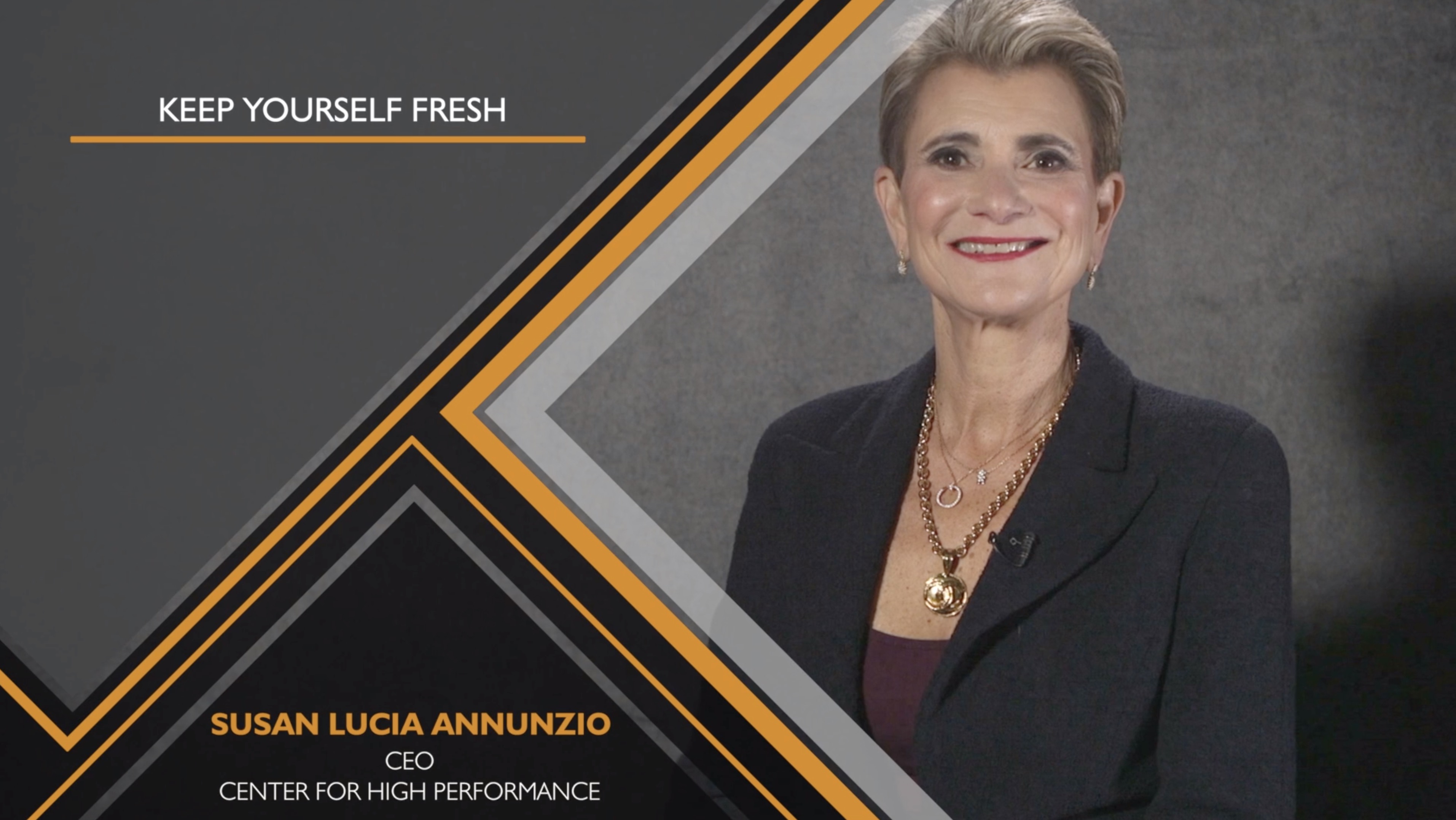
Keep Yourself Fresh – BizCast

   |   By  |  0 Comments

Susan Lucia Annunzio, the seasoned President and CEO of the Center for High Performance overviews her career and what she does to stay relevant as she runs her innovative business strategy organization. Her organization is structured opposite of traditional consultancy groups by eliminating the “bench” model where a roster of consultants wait on the proverbial “bench” for the next “at bat” in exchange for her model of bringing the right talent to hit it out of the park for the job instead. Ms. Lucia – Annunzio has been a pioneer in what is called the “hub and spoke” model of consultancy. In this video, you will learn about why consulting has changed over the last several years.

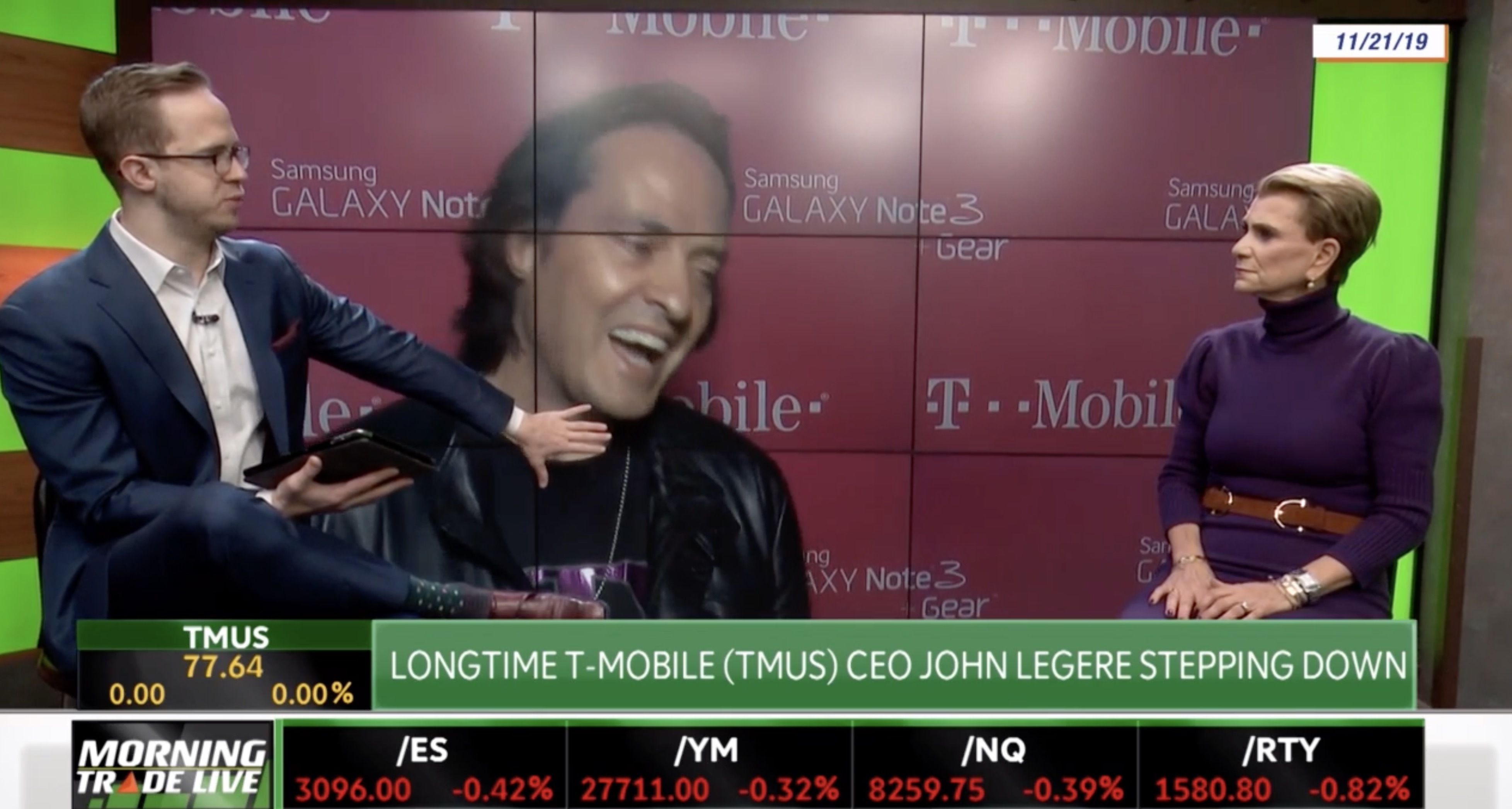
CEO Longevity – Morning Trade Live

   |   By  |  0 Comments

Susan Lucia Annunzio is interviewed on Morning Trade Live to discuss longtime T-Mobile (TMUS) CEO John Legere stepping down and longevity of today’s top CEOs.

Life and Work with Susan Lucia Annunzio

   |   By  |  0 Comments

Today we’d like to introduce you to Susan Lucia Annunzio.

Thanks for sharing your story with us Susan Lucia. So, let’s start at the beginning and we can move on from there.
I started my career as a therapist. One of my clients was the head of new recruits for the national accounting practice at Arthur Andersen. He asked me if I could help him reduce the turnover rate in his department. Although I had no similar experience, I realized that everything I had studied in graduate school — group dynamics, behavioral dynamics, interpersonal relationships — applied to corporations as well as individuals and families. At that time, few consultants were focusing on the “people side” of business. I began working with some colleagues, and in the 1980s we landed Amoco as a client. The company wanted its scientists to come up with more creative oil drilling solutions, but its process discouraged innovation. We developed a program that Amoco credited with increasing creativity and reducing conflict and turnover. Amoco subsequently bought the exclusive oil industry rights to the program. That project launched my career and resulted in my first book, Communicoding.

The principles of leadership and change management that I espoused had a proven effect on increasing the bottom line, which I wrote about in my second book, eLeadership. After it was published, I got a call from the dean of the University of Chicago Booth School of Business, who had read the book and invited me to teach a course in the MBA program. In addition to my consulting work and speaking engagements, I have been teaching high-demand courses at the university for 18 years.

My mission is to demonstrate to senior leaders that treating people with respect and dignity is morally, ethically and fiscally responsible. I knew from experience that companies where people are treated well make more money, but I wanted to prove that with hard data. With the help of a top-notch research firm, my team conducted the largest, most systematic global study on the factors that accelerate or inhibit profitable growth, which I wrote about in my third book, Contagious Success. We proved quantifiably that valuing people is the top predictor of high performance, around the world. I have had the opportunity to share this research at prestigious venues such as the World Economic Forum.

Has it been a smooth road?
Early in my career, a lot of women had decided that they needed to act like men to succeed. They sacrificed their femininity and behaved aggressively in the workplace. The fact that I didn’t do that probably was an obstacle in the short run, but it became an advantage.

I refused to hide my softer side. I was willing to ask for help and I thanked anyone who gave it. Instead of fighting with people, I encouraged them to explain their thinking. I was tough, and I never softened my point of view, but I softened the way I presented it. That became a differentiator for me, helping me in the long term to attract the type of clients I wanted to work with, and strengthening my relationship with male clients, who were comfortable confiding in me.

So, as you know, we’re impressed with Center for High Performance – tell our readers more, for example, what you’re most proud of and what sets you apart from others.
After running a large change management practice for a major consulting firm and serving as CEO of a subsidiary of a global company, I founded the Center for High Performance in 2006 to create a new model of consulting. I lead a virtual team of senior consultants who help business leaders achieve and sustain high performance throughout their organizations. What sets us apart is our data-driven approach. We deliver creative, high-quality work that makes an impact and delivers results. For example, using the findings from our proprietary global research, we create ADVANCES™ (the opposite of “retreats”), customized experiences for boards, executives and top leaders that simulate the factors stifling performance. We also offer customized executive education and coaching.

We have been told repeatedly after an assignment that we over-delivered and surpassed expectations. After working with us, our clients see measurable differences in team performance and the bottom line.

Who have you been inspired by?
Rosa Parks, Mother Teresa, Michele Obama, and Madeline Albright. All were — or are — strong-minded women who stood for something and held true to their beliefs, even in the face of resistance and intimidation.

The High Cost of Executive Bullying

   |   By  |  0 Comments

For generations bullies have terrorized their victims at school, in the locker room and on the playground. More recently, incidents of cyber-bullying and violence against gays have received national attention. The victims of such bullying often feel afraid, out of control and even stupid. They respond by drawing as little attention to themselves as possible and hoping it doesn’t happen again.

Not surprisingly, this same reaction occurs when the CEO or other senior leaders subject people to bullying at work. While the corporate bully may not look or act like the playground thug, the victim’s response in either case is to hunker down and get out of the way. The schoolyard bully uses physical violence; the executive bully uses fear or the threat of humiliation to silence critics or contrarian voices.

Executive bullies don’t all have the same personality. The most pernicious type of corporate bully is the one who comes across as polished and sophisticated. Everything about him sends the message that he is the smartest guy in the room — the one who will make the decisions and get the credit. Although he may ask for others’ opinions and give lip service to their ideas, it’s clear to everyone that it’s “my way or the highway.”

In a corporate setting, that adds up to lost opportunity. Employees’ voices go unheard. Product defects are covered up; unethical practices continue unchecked; untenable financial risks are ignored; brilliant ideas never see the light of day. People are intimidated into keeping quiet.

Bullies may “shoot the messenger,” punishing those who deliver unwanted news. More common, however, is for executive bullies to flaunt their power by summarily dismissing ideas or warnings they don’t want to hear.

The effect is especially harmful when senior team members bully their own colleagues. Ideas that could help resolve strategic and operational issues are not even broached, leading to poor decisions and inadequate solutions. The senior team’s ineffectiveness reverberates throughout the company.

People in positions of authority are invested with legitimate power, and using it constructively to accomplish business goals is justifiable and expected. But in today’s world, in which businesses must make complex decisions in the face of incomplete information and a rapidly changing landscape, no single person has all the answers. Leaders who are dismissive, instill fear or continually demonstrate “who’s boss” discourage employees from expressing their ideas. What would have happened if the young Larry Page or Mark Zuckerberg had needed to convince a powerful executive bully that their game-changing ideas were worth pursuing?

Senior leaders who pay attention to what colleagues are saying are in a better position to meet strategic objectives and deliver sustainable results.

JPMorgan Chase CEO Jamie Dimon, who reportedly can be brash and domineering, nevertheless heeded the warnings of senior executives in 2006. They cautioned him against investing too heavily in risky collateralized debt obligations built on mortgage-backed securities. That was at a time when other financial institutions were making a killing on CDOs.

Dimon backed up the executives despite pressure from analysts, investors and his board, according to Gillian Tett in her book Fool’s Gold. As a result, JPMorgan Chase came through the financial system meltdown in far better shape than other large U.S. banks.

Unfortunately, there are many more examples of leaders who ignored bad news or contrary opinions in the run-up to the financial crisis and suffered the consequences. Think of Stan O’Neal at Merrill Lynch, who was known for quashing debate and firing people whose views ran counter to his own (Merrill Lynch was taken over by Bank of America); Jimmy Cayne, whose detachment and dictatorial behavior contributed to the downfall of Bear Stearns; Richard Syron, who repeatedly rejected internal warnings that Freddie Mac was buying bad loans and denied responsibility when the housing market collapsed; or Joe Cassano, the head of AIG Financial Products, who presided over the business in credit default swaps that drove the firm into a colossal government bailout and damaged its reputation.

A similar situation unfolded recently at MF Global Holdings, where chairman and CEO Jon Corzine directed the firm to make substantial investments in European sovereign debt. Chief risk officer Michael Roseman warned repeatedly about such risky exposure, but Corzine and the board that hired him ignored the warnings. According to the Wall Street Journal, Corzine even hinted that he might leave the company if the board didn’t trust his judgment. Instead, MF Global informed Roseman in January 2011 that he would be replaced. The company bet even more heavily on European debt — and filed for bankruptcy in October after suffering devastating losses.

Why are so many leaders unwilling (or unable) to heed messengers who have the best interest of the company at heart? It’s likely that they tend to view relying on others, expressing doubt or admitting inadequacies as indications of weakness — and weakness is not an option.

These highly competitive people have a strong desire to win, and winning even short-term victories intensifies that desire. All too often, however, it also intensifies self-reliance and suspicion of alternative perspectives. After all, “strong-mindedness” is what got them there in the first place. But when strong-mindedness hardens into close-mindedness, the result is isolation. Most of the people who have risen to the top have been rewarded for knowing, not asking.

Author Jonah Lehrer has reached a similar conclusion. In a Wall Street Journal article about “the power paradox” Lehrer wrote that when leaders rise to power, they change from being “polite, honest and outgoing, [to] become impulsive, reckless and rude.” He added, “Instead of analyzing the strength of the argument, those with authority focus on whether or not the argument confirms what they already believe. If it doesn’t, then the facts are conveniently ignored.”

Under pressure from the investment community and the board to achieve remarkable results in 18 months — or even a single quarter — CEOs become fearful. They instinctively take control, shutting out input from others. But that is the opposite of what they need to do.

At NetApp, perennially one of Fortune’s “Best Companies to Work For,” senior leaders demand interaction and debate. The rule is “If you have something to say, say it. The only unacceptable thing is to leave a meeting and then talk about what you heard in the meeting,” according to Vice Chairman Tom Mendoza. “If people think there’s a top six to ten people who will make all the decisions, that gives them the right to shut down. I believe we have to give them enough information so they will go home and think about it.”
As a result, ideas percolate up at NetApp. “Basically the concept is that we work for them. We invert the pyramid,” added Chairman and CEO Dan Warmenhoven.

When someone approaches Marty Nesbitt, president and CEO of The Parking Spot, with an idea, he says, “We talk about it right there. Maybe I don’t understand it but if that person thinks the idea could make us more money or solve a problem, then we ought to explore it. As long as people are enthusiastic and committed to an idea, I allow them to keep working on it until they convince me.”

Often the dialogue itself results in a better concept. Nesbitt recalled a situation in which an employee proposed a new business idea. Nesbitt wasn’t convinced that it was a good idea, but the two of them kept talking about it. “I changed his perspective and he changed mine. Now we’ve morphed it into an idea that we both came up with. And the dialogue wouldn’t have ever started unless he brought the idea to me.”

Of course, leaders must sometimes take charge and make the tough calls, and in some cases there is no time to collaborate or solicit alternative views. But such situations are not the norm. “My way or the highway” is not an effective way to lead on a regular basis. As former IBM chief Lou Gerstner has said, workers should fear the competition, not their bosses. In an uncertain economic environment, leaders must solicit diverse viewpoints, remain open to new approaches and be willing to accept harsh realities.

Nesbitt is convinced that leadership means trusting smart people to make good decisions even when a suggested approach is unusual. When The Parking Spot, which owns and operates parking facilities near major airports, started in 1998 it was built around a relatively conservative brand. “A couple of years later we hired a marketing person to take control of our brand and the first thing he said was that our identity was all wrong,” Nesbitt recalled.

The new brand manager proposed a new identity based on black-on-yellow polka dots — “spots.” “He thought it was a good idea and I didn’t, but I knew if I was to be the leader I want to be, I had to let this go. It was the best leadership gesture to say we must do it,” Nesbitt said. He gave the go-ahead for a total rebranding campaign, and attributes much of the company’s subsequent growth and success to the new identity.

“It was the single most important business decision we ever made and I made it, not from a financial perspective, but because I knew it was the right thing to do as a leader.”

Yet over and over, companies fail to listen to new approaches or warnings of dangers ahead. They avoid the “unspeakables” — the formidable challenges that everyone acknowledges but no one is willing to bring up for fear of incurring the leader’s ire. Thus employees not only deprive the company of their own best thinking, but they miss the opportunity to collaborate and come up with better solutions. I believe that the biggest single failing of many companies is that they leave so much money on the table — the financial gains they could have realized had they heeded warnings and embraced new approaches.

Recent research conducted by consulting firm Ferrazzi Greenlight supports that conclusion. Writing in the Harvard Business Review, CEO Keith Ferrazzi reported that, of six top banks, those whose leadership teams scored the lowest on candor saw the poorest financial returns during the recent global economic crisis, while groups that communicated candidly about risky practices and potential problems managed to maintain shareholder value. Ferrazzi concluded, “True collaboration is impossible when people don’t trust one another to speak with candor. Solving problems requires that team members be unafraid to ask questions or propose wrong answers.”

When Sonny Garg became president of Exelon Power in August 2010, the company was facing serious challenges, including the closing of several plants, external industry challenges and regulatory changes. Exelon Power appeared to be shrinking and rumors of its demise were rampant.

In early 2011, Garg brought in the Center for High Performance to train leaders and managers to create an open, honest, non-punitive environment where new ideas could take root. Under Garg’s leadership, the company created the “Answering the Call” campaign to encourage communication, formalize the grapevine and bring hallway conversations into the meeting room. “We took people who are well trusted by their peers and made them conduits for information,” said Garg. “We’ve built a stronger sense of trust between leadership/management and employees. People want to feel that they have access to information. We treat them like adults,” he added.

As a result, employee engagement increased 3 percentage points in the last year alone and 4 percentage points in two years, according to a 2011 employee survey. “Commitment to the work and the company” increased by 8 percentage points. The company is now in a much better position to capitalize on opportunities as they arise.

All senior leaders want to succeed and want their companies to succeed. However, if executive bullies are successful, it is despite their bullying not because of it. Executive bullying creates an unhealthy work environment — rife with micro-management, information hoarding and self-interest. This behavior may seem like it’s working in the short term, but what may look like positive results are often short-lived. Sometimes, by the time the company sees the damage, the bully has moved on, leaving the blame to his successor.

When executive bullying flourishes, disrespectful treatment of others can become systemic. I have observed over the 30 years I’ve worked with companies that what goes on in the C-suite sends ripples throughout the organization. Behaviors that originate with the CEO and his direct reports filter down, where they are repeated and amplified. Just as business success can be traced back to a leader’s conduct, so too can business failure. It’s up to the leader to see the bullying cycle for what it is, and avoid it.

Bully Prevention

Below are six steps leaders can take to avoid becoming an executive bully once they move into the corner office.

  1. Set a high ethical bar: Effective leaders understand that behaving morally and not breaking the law are sometimes two different things. Whether or not the behavior of employees at Rupert Murdoch’s News Corp. is ultimately found to be illegal, hacking the phones of celebrities, politicians, relatives of dead soldiers and even a murdered English schoolgirl is unethical, and the company has suffered mightily as a result.
  2. Create a charter: The top leaders at NetApp put together a code of conduct based on what NetApp’s Dan Warmenhoven calls “the five Cs”: candor, collaboration, commitment, communication and community. Similarly, the leadership team at Unite Group PLC, an FTSE 200 company, created a written charter that lays out the values, behaviors and expectations for individual members and the team as a whole. According to Unite CEO Mark Allan, “When you go through that exercise, it gives a shared reference point to hold colleagues to account. We believe that the way the leadership team behaves is the way the rest of the organization will behave.”
  3. Set and enforce a “no bullies rule”: How many senior teams have a member who shuts down everyone else’s ideas, is driven to win every argument, never gives credit to the troops and excels at touting his own accomplishments? If your company puts up with this, you are enabling executive bullies. Give team members permission to call out this behavior — even when you are exhibiting it yourself. Barclays CEO Bob Diamond instituted his own version of the “no bullies rule” at the British bank (he calls it a “no jerks rule”), and has fired 30 people who violated it. “If someone can’t behave with their colleagues and can’t be part of the culture, it doesn’t matter how good they are at what they do, they have to be asked to leave,” Diamond told The Guardian.
  4. Pass the ball: Business is a team sport. No single leader can be expert at everything. Most, in fact, have glaring blind spots. The best executives recognize that and call on others with different strengths to help. Just as executives have content skills, they also have process skills. For example, I once worked with a research and development company whose CEO was a visionary with a talent for seeing opportunities. The head of operations was the opposite — he was always able to identify risks. The business development person brought context and history to the discussion; the marketing person was attuned to how the workforce would react. Together they made an effective team.
  5. Welcome contrarian voices: How many breakthroughs might have been made or disasters averted if domineering executives had not told other team members that their idea was unachievable or their information was wrong? To encourage the free flow of ideas, John W. Rogers, Jr., CEO of Ariel Investments, found a way to ensure that the contrarian voice is heard. “We have formalized the role of the devil’s advocate to force a structured dissenting view in our investment meetings…. By designating another senior member of our team to argue against an idea with the same rigor with which it was researched by the industry specialist, we ensure a balanced argument is not only presented but also heard, ” Rogers told the Wall Street Journal.
  6. Take a look in the mirror: Try to see yourself as others see you, and then ask, “Is that the way I want to be perceived?” It can be helpful to make video recordings of yourself during meetings and watch them with an outside observer who has no stake in the game — perhaps an executive coach. Are you willing to accept harsh realities and confront the problems direct reports bring to your attention? Did you respect the ideas of others? Did you encourage thoughtful debate, or did you squelch it?

Most leaders want to do the right thing for their companies, their people and their communities. They don’t set out to be bullies — indeed, it’s doubtful that even the worst offenders think of themselves that way — but they may become bullies nevertheless. Executives could achieve better results by collaborating to address complex issues instead of unilaterally dictating the way forward. The bottom line: executive bullying is systematic disrespectful treatment of others. And it’s not good for business.

Warning Signs: How Can You Tell if You Are a Corporate Bully?

  • You tend to label people who disagree with you as “naysayers,” “risk-averse,” “incompetent,” etc.
  • You fall in love with an idea, position or deal.
  • No one ever finds fault with your point of view.
  • There is little disagreement or debate within your leadership team.
  • When your team does debate an issue, there are clear “winners” and “losers.”
  • You deliver results but people don’t enjoy working for you.
  • You always believe you are the “smartest guy in the room.”
  • Your direct reports rarely tell you bad news.
  • You are taken by surprise when things go wrong.
  • You believe you are better at almost everything than anyone else on your team.
  • You blame others when things go wrong.
  • You rarely admit mistakes or apologize.
  • You are an expert at “gotcha” — catching others in an error.

This article was featured on the Chief Executive website.